

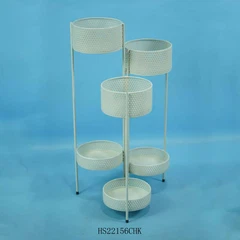
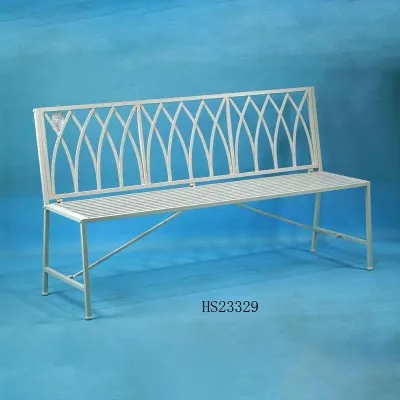
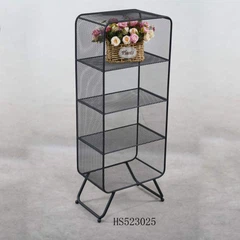
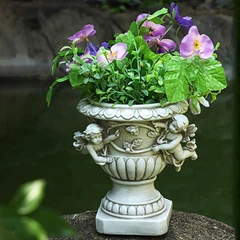
Choose a metal garden cage according to the plant's mature height, spread, stem structure and maintenance needs.
Confirm the overall dimensions, internal growing space, opening layout, wire or tube construction, connection method, ground contact, surface finish and final packed configuration.
A decorative cage should not automatically be treated as a structural plant support. The intended plant and expected use should be stated before sampling.
1. What Is a Metal Garden Cage?
A metal garden cage is a freestanding or ground-installed structure placed around a plant. Depending on the design, it may guide stems, limit outward growth, provide attachment points or create a decorative shape around the plant.
Common forms include:
- Round plant support cages
- Square or rectangular cages
- Tapered tower-style supports
- Decorative dome or obelisk structures
- Multi-ring cages with vertical supports
- Folding or sectional plant cages
- Cages designed for planters or raised beds
The term "garden cage" can describe very different products. The quotation should therefore include a drawing, dimensions and construction details rather than relying on the product name alone.
Buyers can review Bee Wing's Metal Garden Cage category to see available product directions.
2. Start With the Intended Plant and Application
The same cage is not suitable for every plant. Buyers should define the intended application before comparing frame thickness, coating or price.
| Application | Main Requirement | Question for the Supplier |
|---|---|---|
| Young ornamental plants | Guidance without blocking new growth | Will the openings allow stems to develop naturally? |
| Heavy-flowering plants | Support around spreading stems | Where are the main support rings or cross members? |
| Climbing plants | Continuous attachment and growing paths | Can the plant move upward through the complete structure? |
| Vegetable gardens | Access for inspection, harvesting and cleaning | Are the openings large enough for routine access? |
| Retail garden décor | Appearance, simple installation and clear packaging | Can customers understand the assembled shape from the carton? |
| Landscape projects | Consistent dimensions, finish and installation method | Can identical units be positioned consistently across the site? |
Provide the supplier with the plant type, expected mature size, growing location and required maintenance access. This information is more useful than requesting a "strong garden cage" without defined conditions.
3. Garden Cage, Trellis or Garden Arch?
These products can all support plants, but they perform different landscape functions. Choosing the wrong product type may create problems with access, placement or growing space.
| Product Type | Typical Position | Primary Function | Important Limitation |
|---|---|---|---|
| Metal garden cage | Around an individual plant or small plant group | Surrounds and guides growth | Internal space and maintenance access must be checked |
| Metal garden trellis | Behind or beside plants | Provides a mainly vertical growing surface | It does not normally surround the plant |
| Metal garden arch | Across a path or entrance | Creates an overhead landscape feature | Requires passage clearance and broader installation planning |
Buyers needing a flat or wall-adjacent support can explore the Metal Garden Trellis range. For entrances and walkways, review the Metal Garden Arch category.
4. Confirm the Complete Cage Dimensions
Overall height and width are only the starting points. Buyers also need to understand the usable internal space and the relationship between the cage and the ground.
The approved drawing should identify:
- Total height
- Maximum outer width or diameter
- Internal growing width
- Shape at the top and base
- Number and position of horizontal supports
- Spacing between vertical members
- Size and position of access openings
- Length of stakes or ground-insertion sections
- Height above the soil after installation
- Connection points on sectional products
- Decorative projections or finials
- Final assembled weight where specified
For planter use, confirm both the cage dimensions and the usable internal dimensions of the planter. A cage that fits the outside measurement may still conflict with the planter wall, soil space or drainage system.
5. Match the Cage Geometry to Plant Growth
The geometry determines how stems pass through the structure and where the plant receives support. A visually attractive pattern may not provide suitable growing paths.
| Design Feature | What It Influences | Buyer's Check |
|---|---|---|
| Vertical members | Upward guidance and lateral containment | Check their spacing and connection to the base |
| Horizontal rings | Support at different growth levels | Confirm their height and attachment method |
| Tapered profile | Available space from the base to the top | Make sure mature growth is not restricted |
| Decorative grid | Attachment points and appearance | Check that dense patterns do not block access |
| Open top | Continued upward growth | Confirm whether stems can extend beyond the structure |
| Closed decorative top | Finished appearance and growth direction | Review plant access and final mature form |
Ask for photos of the fully assembled cage from the front, side and top. Perspective images alone can make opening sizes and taper difficult to judge.
6. Check Openings and Maintenance Access
Plants change the way the product is used. Once leaves and stems fill the cage, users still need access for watering, pruning, tying, inspection and harvesting.
During product selection, consider:
- Whether a hand can reach the plant through the openings
- Whether stems can be guided without sharp bending
- Whether pruning tools can reach inside safely
- Whether fruit or vegetables can be removed
- Whether damaged foliage can be cleared
- Whether the cage can be removed without harming mature growth
- Whether ground stakes obstruct the root area
- Whether decorative elements create snagging points
Use a physical plant, representative branches or a simple full-size mock-up to test the openings. A dimension that appears reasonable in a drawing may be inconvenient during actual garden maintenance.
7. Review the Metal Structure and Connections
The structural specification should identify the form of the metal members and how they are connected. Avoid approving a product based only on the general statement "made of metal."
Ask the supplier to document:
- Main wire, rod or tube construction
- Material dimensions for critical members
- Number and position of vertical supports
- Ring or cross-member construction
- Welded, bolted, hooked or fitted connections
- Section joints on knock-down products
- Ground-stake construction
- Decorative component attachment
- Accessible edges and end treatments
If two quotations use different member sizes, support layouts or connection methods, they should not be compared as identical products.
Buyers can also review Bee Wing's Metal Plant Cage and Wrought Iron Plant Cage pages when comparing construction directions.
8. Does a Metal Garden Cage Need Reinforcement?
Reinforcement depends on the cage geometry, material sections, total height, plant growth, installation method and environmental exposure. It cannot be determined from the product name alone.
A taller or wider structure may require a different support arrangement from a compact decorative cage. Dense foliage may also increase the area exposed to wind.
Evaluate these areas during sampling:
- Movement at the base
- Flexing of vertical members
- Shape retention after assembly
- Movement at sectional connections
- Distortion of rings or decorative grids
- Ground contact after plant loading
- Stability when exposed to expected garden conditions
Required strength or stability tests should be defined according to the intended application and destination market. Avoid adding unsupported load claims to retail packaging.
9. Plan the Installation Method
A cage may be pushed directly into soil, placed over an existing plant, fixed inside a planter or assembled around mature growth. Each method creates different product requirements.
| Installation Method | What to Confirm | Possible Issue |
|---|---|---|
| Inserted into soil | Stake length, spacing, ends and installed height | Poor holding in loose or shallow soil |
| Installed in a planter | Planter opening, soil depth and root clearance | Conflict with the planter wall or drainage |
| Placed over a young plant | Base opening and installation sequence | Damage to branches during placement |
| Assembled around a plant | Section count, connectors and tool access | Difficult alignment around existing growth |
| Used in a raised bed | Bed depth, spacing and nearby plants | Interference with other supports or irrigation |
Installation instructions should explain which end enters the ground, the required assembly order and how users should avoid damaging the finished surface.
10. Specify a Suitable Outdoor Finish
Metal plant cages may remain in contact with damp soil, irrigation water, fertilizers, foliage and outdoor weather. The required surface system should therefore be connected to the actual installation environment.
The finish specification should include:
- Surface preparation or pretreatment
- Coating or paint system
- Color reference
- Gloss or texture
- Coverage around welds and intersections
- Coverage at ground-insertion sections
- Protection around cut ends and connection points
- Drainage provisions for hollow sections where applicable
- Buyer-required coating or corrosion tests
A sample color chip confirms appearance but does not define the complete coating process. Record both the visual reference and the required finish system.
Do not describe a finish as permanently rust-free or maintenance-free unless a specific, verifiable basis supports that claim. Outdoor service life depends on the finish, environment, handling and maintenance.
11. Compare Fixed, Folding and Knock-Down Designs
The product structure affects both customer use and shipping efficiency. Buyers should review final packed volume together with assembly convenience.
| Construction | Possible Advantage | Inspection Focus |
|---|---|---|
| Fully welded | No customer assembly | Frame alignment, occupied carton volume and protection |
| Folding | Compact storage and simpler positioning | Hinges, locking points and final shape |
| Knock-down | Reduced packed size for some designs | Part identification, connectors and assembly accuracy |
| Stackable sections | Adjustable height or modular retail presentation | Joint fit, orientation and stability of the completed cage |
For sectional products, complete multiple assembly cycles during sample review. Check whether connectors loosen, finished surfaces rub or the frame becomes difficult to align.
12. Customization for Retail and Private-Label Orders
Customization should be controlled through an approved specification rather than informal photo references.
Possible customization areas include:
- Overall height and width
- Round, square, tapered or decorative shape
- Number and position of support rings
- Opening pattern
- Decorative top treatment
- Color and surface texture
- Fixed, folding or sectional construction
- Single-unit or multi-piece retail set
- Brand label and carton artwork
- Barcode and destination-market labeling
- Assembly and care instructions
Not every requested change is compatible with the original structure. Changes to height, width, openings or sectional connections should be evaluated through a new sample.
For more decorative product styles, buyers can also review Bee Wing's Decorative Metal Plant Cages.
13. Packaging and Container-Loading Checks
Garden cages can be lightweight in appearance but inefficient in shipping when their shape prevents close nesting. Buyers should obtain logistics data from the approved packaged sample.
| Packaging Area | Risk | Buyer's Check |
|---|---|---|
| Long metal sections | Bending or carton puncture | End protection and internal restraint |
| Decorative tops | Distortion or surface damage | Separate protection around projecting details |
| Nested cages | Metal-to-metal rubbing | Protective separation between finished units |
| Sectional parts | Missing or mixed pieces | Part identification and complete set control |
| Retail cartons | Customer cannot understand the product | Clear assembled image, dimensions and installation information |
Request the final carton count, packed dimensions, gross weight, units per carton and estimated container quantity. These values should come from the approved packaging configuration.
14. Sample Approval and Pre-Shipment Inspection
Inspect the garden cage in its assembled and installed position. Separate parts may appear acceptable but fail to produce the required shape after assembly.
- Correct model, design and quantity
- Overall height, width and installed height
- Internal growing space
- Opening size and position
- Frame symmetry and final shape
- Vertical support alignment
- Ring and cross-member position
- Welds and sectional connections
- Ground-stake dimensions and alignment
- Accessible edges and projections
- Surface preparation and coating coverage
- Finish around welds, joints and ground sections
- Assembly using supplied instructions
- Part and hardware completeness
- Packaging and carton markings
- Buyer-required stability and coating tests
Metal Garden Cage RFQ Checklist
A complete RFQ allows a garden support cage supplier to evaluate the intended plant, structure, finish and packaging before preparing a quotation.
Include the following information:
- Reference photo or drawing
- Intended plant or product application
- Expected mature plant size
- Required overall and installed dimensions
- Preferred cage shape
- Required opening arrangement
- Metal member requirements
- Ground-installation method
- Fixed, folding or knock-down construction
- Color and surface finish
- Indoor, covered outdoor or exposed application
- Single product or retail set configuration
- Branding, labeling and instruction requirements
- Testing and inspection requirements
- Order quantity and destination market
- Target delivery schedule
Common Garden Cage Sourcing Mistakes
| Mistake | Possible Result | Better Approach |
|---|---|---|
| Choosing by appearance alone | Openings or internal space do not suit the plant | Start with plant growth and maintenance requirements |
| Specifying only total height | Installed and usable height remain unclear | Record total, inserted and above-ground dimensions |
| Ignoring access after plant growth | Pruning or harvesting becomes difficult | Test openings with a full-size sample |
| Assuming every soil condition is the same | The cage may lean or loosen | Review stake design and actual installation conditions |
| Comparing unit price without packaging | Bulky cartons increase landed cost | Compare final packed volume and container quantity |
| Skipping trial assembly | Sectional parts do not form the approved shape | Assemble packed samples during inspection |
Final Buying Advice
The right metal garden cage must fit the plant, installation area and customer maintenance process. A decorative shape alone does not confirm that the product will provide suitable growing space or support.
Before bulk production, approve the fully assembled sample and record the dimensions, opening layout, metal structure, ground fixing, finish, packaging and inspection requirements.
Use this metal garden cage buying guide to create one consistent specification for every supplier under review. This makes price, construction and logistics comparisons more meaningful.
Buyers can browse the complete Metal Garden Decoration collection for related plant supports and landscaping products.
Send your reference design, intended plant, required dimensions, cage structure, finish, installation method, packaging needs, quantity and destination market to Bee Wing for product evaluation and quotation.
Frequently Asked Questions
It is placed around a plant to guide stems, provide attachment points, control the growing shape or add a decorative garden feature. The exact function depends on the cage design.
Consider the plant's mature height and spread, the required internal space, the part inserted into the soil and the access needed for pruning, watering or harvesting.
A cage normally surrounds an individual plant or plant group. A trellis provides a mainly flat or vertical growing surface beside the plant.
It depends on their height, width, metal construction, connection method, plant growth and installation conditions. The complete assembled design should be evaluated during sampling.
Some designs can be divided into sections or made foldable. Buyers should check connection fit, final shape, stability, instructions and repeated assembly performance.
The finish should be selected according to soil contact, irrigation, weather exposure and the destination environment. Buyers should specify the finish process and required tests instead of approving color alone.
Inspect dimensions, cage shape, openings, metal members, connections, stakes, accessible edges, finish coverage, assembly, packaging and all buyer-required tests.