

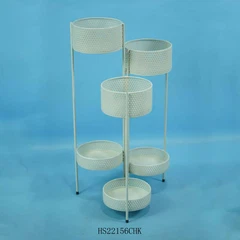
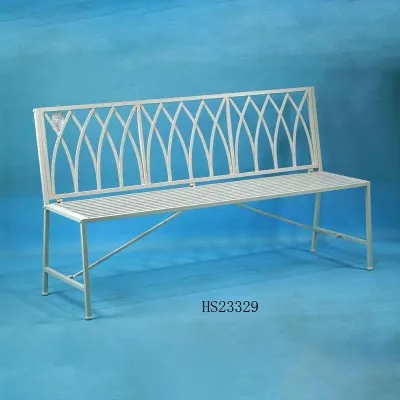
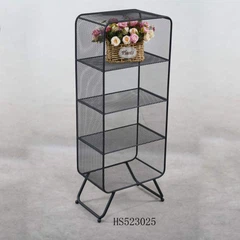

A wholesale metal garden products order may include dozens of designs, several colors and different packaging requirements.
That makes the purchase more complex than selecting products from a catalogue and asking for the lowest unit price.
Importers must consider whether the product mix fits their sales channel, how many units can be loaded into a container, whether the packaging protects each item and how quality will be checked before shipment.
This guide provides a practical checklist for importers, wholesalers, garden centers and home décor retailers preparing to purchase wholesale metal garden products.
The first decision is not which design looks best. It is which group of products fits your customer and distribution channel.
A garden center, furniture retailer and e-commerce seller may all purchase metal garden products, but they do not require the same assortment.
Bee Wing's product range is divided into several main categories: Avoid filling an order with too many unrelated designs.
A coordinated collection is usually easier to display, promote and reorder. It can be built around a common finish, color, pattern or application.
SKU means stock keeping unit. Each model, size or color may become a separate SKU in your inventory system.
A clear SKU plan helps you control purchasing quantities and prevents the order from becoming unnecessarily complicated.
For each proposed product, record:
Do not allocate the same quantity to every design automatically.
Order volume should reflect expected sales, carton size, MOQ, seasonal demand and the risk of holding unsold inventory.
A catalogue photograph is not a complete product specification.
Before confirming a wholesale order, the buyer should understand what is being purchased and which details may affect cost or performance.
The specification may include:
Do not assume that every plant stand, flower pot or garden bench uses the same material or surface treatment.
If the supplier changes a dimension, material or structure during sample development, update the specification before production.
A decorative item used inside a home does not face the same conditions as furniture placed outdoors.
Before ordering, define where and how the product will be used:
For outdoor products, buyers should discuss the expected exposure with the supplier rather than relying only on the general term "weather-resistant."
Any required test method or performance level should be agreed separately according to the target market and buyer's own requirements.
Decorative products still need to work correctly.
A plant stand should remain stable after pots are placed on it. A hanging planter needs suitable connection points. A folding table should open and close properly. A rocking chair or swing requires careful review of its moving parts.
Sample checks should match the product type.
Do not publish load, safety or durability claims based only on a visual inspection.
Such statements should be supported by an agreed specification and suitable validation.
MOQ means minimum order quantity. In wholesale metal garden products, MOQ may apply to:
If you want to test several designs, discuss whether different products can be combined in one shipment. Mixed loading can help expand the assortment, but it does not necessarily remove the MOQ for each model.
Custom colors and printed packaging may also have separate minimum quantities.
Before accepting a high MOQ, compare it with:
A useful quotation should contain more than the product name and price.
Make sure all suppliers quote against the same quantity, packaging and trade term.
Otherwise, the price comparison will be misleading.
The factory price is only one part of the cost of importing metal garden products.
The total landed cost may also be affected by:
Do not add generic duty or tax percentages without confirming the current classification and destination-market rules.
Metal products can be scratched, bent or damaged if parts move inside the carton.
Products with mosaic, ceramic or decorative surfaces require additional protection against impact and abrasion.
Ask for the proposed packaging method before production.
Confirm:
A carton that performs well inside a full shipping container may not be suitable for individual parcel delivery.
Large garden furniture and decorative products can occupy considerable container space.
Request the packaging volume and estimated loading quantity for each product.
The calculation should use the final approved carton dimensions, not an early estimate.
Consider:
The best packing solution protects the goods while keeping the shipment commercially practical.
Importers should identify the labels, instructions, warnings and documents required by their market and sales channel.
These may vary by country, retailer and product type.
Possible requirements include:
Do not assume that a general export carton automatically meets every destination or retailer requirement.
A sample allows the buyer to examine details that are difficult to judge from photographs.
Check:
Once the final sample is approved, identify it clearly as the production reference. The manufacturer and buyer should use the same revision of drawings, color references and specifications.
If important changes are made after approval, decide whether another sample or pre-production confirmation is needed.
The inspection plan should be discussed before production, not after the goods are packed.
It should identify:
A final inspection should not rely only on general statements such as "quality is good."
The results should be connected to the approved item specification.
Garden products often have seasonal sales cycles.
Work backward from the required warehouse arrival date and allow time for:
Ask the supplier for a project-specific production plan and update it when the order changes.
Do not plan around the shortest possible lead time without allowing for approval and shipping risks.
A good wholesale order should be commercially suitable before it enters production.
The selected products must fit the target market, the quantity must match realistic sales expectations and the packaging must support the intended distribution channel.
Careful preparation reduces purchasing risk and makes future repeat orders easier to manage.
Explore All Products Request a Wholesale Quote
That makes the purchase more complex than selecting products from a catalogue and asking for the lowest unit price.
Importers must consider whether the product mix fits their sales channel, how many units can be loaded into a container, whether the packaging protects each item and how quality will be checked before shipment.
This guide provides a practical checklist for importers, wholesalers, garden centers and home décor retailers preparing to purchase wholesale metal garden products.
Quick Summary
A successful wholesale order starts with the right product mix and clear specifications. Buyers should confirm the MOQ for each design, compare quotations on the same basis, evaluate samples, calculate packaging volume and agree on the inspection process before production begins. Product price matters, but it is only one part of the total landed cost.
Product Mix
Select designs that fit the target customer, retail price and sales channel.
Select designs that fit the target customer, retail price and sales channel.
Clear Specifications
Confirm dimensions, materials, finish, assembly and intended application.
Confirm dimensions, materials, finish, assembly and intended application.
Packing Efficiency
Compare carton volume and loading quantity as well as product price.
Compare carton volume and loading quantity as well as product price.
Quality Control
Define how samples, production and finished goods will be inspected.
Define how samples, production and finished goods will be inspected.
1. Build the Product Mix Around Your Sales Channel
The first decision is not which design looks best. It is which group of products fits your customer and distribution channel.
A garden center, furniture retailer and e-commerce seller may all purchase metal garden products, but they do not require the same assortment.
| Sales Channel | Suitable Product Direction | Main Buying Considerations |
|---|---|---|
| Garden centers | Plant stands, trellises, arches, flower pots and planter boxes | Seasonal demand, display value and outdoor finish |
| Furniture retailers | Benches, tables, bistro sets, rocking chairs and swings | Style collection, comfort, assembly and retail packaging |
| Home décor stores | Decorative plant stands, flower pots, wall décor and small furniture | Color coordination, small-space use and visual design |
| E-commerce sellers | Compact, foldable, nesting or knock-down products | Parcel packaging, assembly, damage and return risk |
| Project buyers | Benches, large planters, arches and commercial outdoor furniture | Project dimensions, batch consistency and delivery schedule |
Bee Wing's product range is divided into several main categories: Avoid filling an order with too many unrelated designs.
A coordinated collection is usually easier to display, promote and reorder. It can be built around a common finish, color, pattern or application.
2. Create a SKU Plan Before Requesting Prices
SKU means stock keeping unit. Each model, size or color may become a separate SKU in your inventory system.
A clear SKU plan helps you control purchasing quantities and prevents the order from becoming unnecessarily complicated.
For each proposed product, record:
- Supplier item number
- Your internal item number
- Product category
- Dimensions
- Color and finish
- Order quantity
- MOQ
- Unit price
- Packaging dimensions
- Estimated loading quantity
- Target retail price
Core Products
Designs expected to generate stable sales and repeat orders.
Designs expected to generate stable sales and repeat orders.
Supporting Products
Items that complete the range and support cross-selling.
Items that complete the range and support cross-selling.
Test Products
New designs purchased in controlled quantities to evaluate demand.
New designs purchased in controlled quantities to evaluate demand.
Do not allocate the same quantity to every design automatically.
Order volume should reflect expected sales, carton size, MOQ, seasonal demand and the risk of holding unsold inventory.
3. Define the Product Specifications
A catalogue photograph is not a complete product specification.
Before confirming a wholesale order, the buyer should understand what is being purchased and which details may affect cost or performance.
The specification may include:
- Overall product dimensions
- Main frame material
- Tube, wire or sheet dimensions
- Surface finish
- Approved color
- Fixed, folding or knock-down structure
- Assembly hardware
- Product weight
- Intended indoor or outdoor use
- Individual packaging method
Do not assume that every plant stand, flower pot or garden bench uses the same material or surface treatment.
If the supplier changes a dimension, material or structure during sample development, update the specification before production.
Buyer reminder: Different specifications can produce very different quotations. Compare suppliers only after the material, dimensions, finish, packaging and quantity have been aligned.
4. Match the Product to Its Intended Environment
A decorative item used inside a home does not face the same conditions as furniture placed outdoors.
Before ordering, define where and how the product will be used:
- Indoor home environment
- Covered balcony or patio
- Open garden
- Coastal or high-humidity area
- Commercial venue
- Seasonal event
- Retail display
For outdoor products, buyers should discuss the expected exposure with the supplier rather than relying only on the general term "weather-resistant."
Any required test method or performance level should be agreed separately according to the target market and buyer's own requirements.
5. Check Function, Stability and Assembly
Decorative products still need to work correctly.
A plant stand should remain stable after pots are placed on it. A hanging planter needs suitable connection points. A folding table should open and close properly. A rocking chair or swing requires careful review of its moving parts.
Sample checks should match the product type.
| Product Type | Key Points to Check |
|---|---|
| Plant stands | Balance, shelf spacing, pot fit, feet and frame alignment |
| Flower pots and boxes | Dimensions, drainage design, seams, base and intended liner |
| Trellises and arches | Connection points, ground fixing, alignment and assembly |
| Tables and chairs | Level surfaces, stability, hardware, folding parts and assembly |
| Swings and rocking furniture | Frame alignment, moving parts, fasteners and operating clearance |
Do not publish load, safety or durability claims based only on a visual inspection.
Such statements should be supported by an agreed specification and suitable validation.
6. Confirm MOQ for Every Design and Color
MOQ means minimum order quantity. In wholesale metal garden products, MOQ may apply to:
- Each product model
- Each size
- Each color
- Each packaging design
- The total order value
If you want to test several designs, discuss whether different products can be combined in one shipment. Mixed loading can help expand the assortment, but it does not necessarily remove the MOQ for each model.
Custom colors and printed packaging may also have separate minimum quantities.
Before accepting a high MOQ, compare it with:
- Expected monthly sales
- Available warehouse space
- Product seasonality
- Reorder time
- Inventory budget
- Carton volume
7. Compare the Complete Quotation
A useful quotation should contain more than the product name and price.
| Quotation Field | Why It Matters |
|---|---|
| Item number | Connects the quotation to the correct product and specification |
| Dimensions | Prevents price comparison between different sizes |
| Material and finish | Clarifies what is included in the unit price |
| MOQ | Shows the required quantity for each design |
| Packaging | Affects protection, carton volume and landed cost |
| Trade term | Defines which costs are included in the quotation |
| Lead time | Supports seasonal purchasing and shipping plans |
| Payment terms | Affects cash flow and order planning |
Make sure all suppliers quote against the same quantity, packaging and trade term.
Otherwise, the price comparison will be misleading.
8. Calculate More Than the Factory Price
The factory price is only one part of the cost of importing metal garden products.
The total landed cost may also be affected by:
- Sample and development charges
- Individual packaging
- Printed labels and cartons
- Inspection costs
- Inland transport
- Export handling
- Ocean or air freight
- Insurance
- Import duties and taxes
- Warehousing
- Damage and replacement risk
Do not add generic duty or tax percentages without confirming the current classification and destination-market rules.
Simple decision rule: Compare the expected landed cost per sellable unit, not only the supplier's unit price.
9. Review Packaging Before Approving the Order
Metal products can be scratched, bent or damaged if parts move inside the carton.
Products with mosaic, ceramic or decorative surfaces require additional protection against impact and abrasion.
Ask for the proposed packaging method before production.
Confirm:
- Whether the product is fully assembled, folded or knock-down
- Number of units per carton
- Protection between metal parts
- Corner and edge protection
- Location of hardware packs
- Assembly instruction placement
- Inner and outer carton construction
- Carton dimensions
- Gross and net weight
- Carton marks
A carton that performs well inside a full shipping container may not be suitable for individual parcel delivery.
10. Check Container-Loading Efficiency
Large garden furniture and decorative products can occupy considerable container space.
Request the packaging volume and estimated loading quantity for each product.
The calculation should use the final approved carton dimensions, not an early estimate.
Consider:
- Carton cubic volume
- Units per carton
- Carton orientation
- Stacking limits
- Fragile product placement
- Mixed-model loading
- Unused gaps between cartons
The best packing solution protects the goods while keeping the shipment commercially practical.
11. Confirm Labels and Destination-Market Requirements
Importers should identify the labels, instructions, warnings and documents required by their market and sales channel.
These may vary by country, retailer and product type.
Possible requirements include:
- Product identification label
- Country-of-origin marking
- Barcode
- Importer information
- Assembly instructions
- Care information
- Carton shipping marks
- Retailer-specific labels
- Product-specific warnings where applicable
Do not assume that a general export carton automatically meets every destination or retailer requirement.
12. Approve Samples and Keep a Reference
A sample allows the buyer to examine details that are difficult to judge from photographs.
Check:
- Dimensions
- Color and finish
- Welding
- Frame alignment
- Stability
- Function
- Assembly
- Accessories
- Packaging
Once the final sample is approved, identify it clearly as the production reference. The manufacturer and buyer should use the same revision of drawings, color references and specifications.
If important changes are made after approval, decide whether another sample or pre-production confirmation is needed.
13. Agree on the Quality Inspection Plan
The inspection plan should be discussed before production, not after the goods are packed.
It should identify:
- Which specifications will be checked
- When inspection will take place
- How samples will be selected
- Which defects are unacceptable
- How functional checks will be performed
- How packaging will be reviewed
- What happens if problems are found
Incoming Materials
Check the main materials before production.
Check the main materials before production.
During Production
Identify repeated problems before completion.
Identify repeated problems before completion.
Final Inspection
Compare finished goods with the approved specification.
Compare finished goods with the approved specification.
Loading Check
Confirm quantity, cartons and container condition.
Confirm quantity, cartons and container condition.
A final inspection should not rely only on general statements such as "quality is good."
The results should be connected to the approved item specification.
14. Plan the Order Around the Selling Season
Garden products often have seasonal sales cycles.
Work backward from the required warehouse arrival date and allow time for:
- Product selection
- Quotation confirmation
- Sample production
- Sample revisions
- Packaging approval
- Mass production
- Quality inspection
- Shipping
- Customs clearance
- Warehouse receiving
Ask the supplier for a project-specific production plan and update it when the order changes.
Do not plan around the shortest possible lead time without allowing for approval and shipping risks.
Common Wholesale Ordering Mistakes
| Mistake | Possible Result | Better Approach |
|---|---|---|
| Selecting too many unrelated designs | Fragmented inventory and difficult merchandising | Build a coordinated product collection |
| Comparing only the unit price | Packaging, freight and damage costs are missed | Compare estimated landed cost per sellable unit |
| Using incomplete specifications | Suppliers quote different product standards | Issue the same specification to each supplier |
| Ignoring carton volume | Low container efficiency and higher freight cost | Review final carton dimensions before ordering |
| Approving changes verbally | Old details may enter mass production | Update drawings and specifications in writing |
| Planning inspection too late | Problems are found after packing | Agree on inspection before production |
Final Pre-Order Checklist
Before placing a wholesale metal garden products order, confirm:
- The product mix fits the target customer and sales channel.
- Every design has a clear item number.
- Dimensions, materials and finishes are recorded.
- MOQ is confirmed by model, size and color.
- Quotations use the same trade term and packaging basis.
- Samples have been checked and approved.
- All revisions are included in the final specification.
- Retail labels and carton marks have been approved.
- Packaging dimensions and weights are available.
- Estimated container-loading quantities have been reviewed.
- The production and shipping schedule supports the selling season.
- The quality inspection plan has been agreed.
- The required shipping documents have been confirmed.
A good wholesale order should be commercially suitable before it enters production.
The selected products must fit the target market, the quantity must match realistic sales expectations and the packaging must support the intended distribution channel.
Careful preparation reduces purchasing risk and makes future repeat orders easier to manage.
Plan Your Wholesale Metal Garden Products Order
Browse our garden décor and outdoor furniture collections, or send us your target products, quantities, colors and packaging requirements.Explore All Products Request a Wholesale Quote