


How to Choose a Metal Garden Furniture Manufacturer for OEM Orders
Choosing a metal garden furniture manufacturer is not only about comparing prices and product photographs.
For an OEM order, the supplier must turn your design, dimensions, finish, packaging and quality requirements into a product that can be manufactured consistently.
A supplier may offer an attractive sample but still struggle with batch consistency, production scheduling, packaging or communication. These problems often appear after the purchase order has been placed.
This guide explains how importers, furniture brands, garden centers and distributors can evaluate a manufacturer before starting an OEM metal garden furniture project.
Quick Summary
A suitable OEM supplier should be able to explain its manufacturing process, develop samples from clear specifications, control materials and finishes, inspect the finished furniture and design export packaging around the actual sales channel. Buyers should evaluate the complete order process instead of making a decision based only on unit price.
Product Development
Can the supplier work from drawings, samples or product references?
Can the supplier work from drawings, samples or product references?
Production Control
Are materials, welding, dimensions and assembly checked during production?
Are materials, welding, dimensions and assembly checked during production?
Finish Consistency
Can the approved color and surface effect be repeated across the order?
Can the approved color and surface effect be repeated across the order?
Export Packaging
Is the packaging suitable for container shipping, retail or e-commerce?
Is the packaging suitable for container shipping, retail or e-commerce?
What Does OEM Mean for Metal Garden Furniture?
OEM stands for Original Equipment Manufacturer. In a typical furniture project, the manufacturer produces goods according to requirements provided or approved by the buyer.
These requirements may include:
- Product dimensions
- Frame structure
- Decorative details
- Material specifications
- Surface finish and color
- Brand labels
- Retail packaging
- Carton markings
- Assembly instructions
A buyer may select an existing frame and request changes to its color, size, decoration or packaging. Another project may begin with a sketch or physical reference sample and require more extensive development.
The first step is to define how much customization the project actually needs.
Important distinction: OEM production follows buyer-approved requirements, while ODM projects generally involve more design input from the manufacturer. In practice, the scope should be written clearly because suppliers may use these terms differently.
Start with the Right Product Category
Not every outdoor furniture factory specializes in the same products.
A manufacturer focused on aluminum lounge furniture may not be the right choice for decorative iron benches, mosaic tables or garden arches. Production equipment, worker experience and packaging methods can differ between these categories.
Bee Wing's metal garden furniture collection includes several product groups:
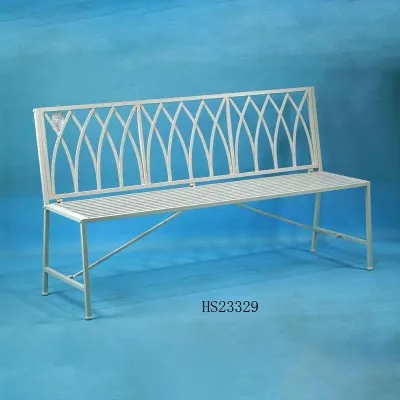
- Metal garden benches
- Metal garden tables
- Metal patio bistro sets
- Metal garden rocking chairs
- Metal garden swings
- Metal garden arch benches
Previous experience with a similar product does not guarantee success, but it can reduce development uncertainty.
Verify the Manufacturer's Production Capabilities
A supplier should be able to explain how the furniture is produced.
For metal garden furniture, common production stages may include cutting, forming, punching, welding, surface preparation, coating, assembly, inspection and packaging.
The exact process depends on the design.
Ask the supplier which processes are completed in-house and which are outsourced. Outsourcing is not automatically a problem, but the supplier must still control quality and production timing.
Useful questions include:
- Which metalworking equipment is used for this product?
- Who controls the welding fixtures and product dimensions?
- Where is surface treatment completed?
- How are outsourced processes inspected?
- Can the factory produce a trial sample?
- How is the approved sample transferred to mass production?
- Who signs off the final inspection?
Request production details that relate directly to your product rather than accepting a general company presentation.
Evaluate the Product Development Process
OEM development should follow a controlled sequence.
1
Requirement Brief
Requirement Brief
2
Technical Review
Technical Review
3
Sample Production
Sample Production
4
Sample Evaluation
Sample Evaluation
5
Final Approval
Final Approval
The project brief should contain enough information for the supplier to understand the intended product.
Include:
- Reference images or technical drawings
- Overall dimensions
- Intended use
- Target sales market
- Expected order quantity
- Required color and finish
- Packaging type
- Target completion schedule
- Any buyer-specific testing requirements
Every sample revision should be recorded. Otherwise, an old dimension or finish may reappear during mass production.
Check Materials and Structural Details
Product descriptions often use broad terms such as "metal," "iron" or "steel frame." These terms alone are not enough for an OEM purchase order.
The product specification should identify the parts that affect construction and use.
Depending on the furniture design, buyers may need to confirm:
- Frame material
- Tube, wire or sheet dimensions
- Material thickness
- Welding locations
- Decorative components
- Tabletop or seat material
- Fasteners and connection points
- Foot caps or floor-contact parts
- Foldable or knock-down structure
- Intended load and use conditions
For this reason, all structural changes should be approved before production.
Review Welding, Stability and Assembly
Outdoor furniture must remain stable during its intended use.
For a bench or chair, check whether all legs make proper contact with the floor. For tables, examine movement in the frame and tabletop. For rocking chairs and swings, inspect moving parts and connection points carefully.
Sample evaluation should include:
- Welding position and consistency
- Sharp edges and exposed points
- Frame alignment
- Level seating and table surfaces
- Connection hardware
- Moving components
- Folding or rocking operation
- Assembly sequence
This provides a more realistic view of the customer experience.
Buyer reminder: Do not publish load capacity or safety claims based only on an estimate. Any performance statement should be supported by the agreed product specification and appropriate validation.
Confirm the Surface Treatment
Outdoor metal furniture is exposed to moisture, temperature changes, sunlight and physical wear. Surface preparation and coating therefore need to be discussed at the start of the project.
Powder coating is commonly used for metal garden furniture, but simply stating "powder coated" does not fully describe the required finish.
The buyer should confirm:
- Surface preparation method
- Coating type
- Approved color reference
- Gloss, matte or textured appearance
- Indoor or outdoor application
- Expected environmental exposure
- Acceptable visual variation
- Buyer-required coating tests, if applicable
Do not approve an important color only from a photograph displayed on a screen.
Assess the Quality Control System
A good sample does not prove that every item in a bulk order will match it.
The manufacturer should have checkpoints that identify problems before the products reach final packaging.
| Inspection Stage | What Should Be Checked | Possible Risk |
|---|---|---|
| Incoming material | Material type, dimensions and visible condition | Wrong or inconsistent material |
| Frame production | Cutting, forming, dimensions and alignment | Parts do not fit together |
| Welding | Joint position, completeness and sharp edges | Weak or untidy connections |
| Surface finish | Color, coverage, scratches and exposed areas | Inconsistent appearance or early corrosion |
| Assembly | Hole alignment, hardware, stability and function | Customer assembly problems |
| Final packaging | Accessories, protection, carton marks and quantity | Damage, missing parts or shipping errors |
Ask how inspection results are recorded and how non-conforming products are handled.
For larger orders, buyers may arrange inspection during production as well as before shipment.
Understand MOQ, Samples and Lead Time
MOQ means minimum order quantity. It can vary by product rather than by factory.
Factors that may affect MOQ include:
- Material purchasing quantity
- Coating color
- Product complexity
- Number of selected designs
- Custom packaging
- Logo and labeling requirements
- Production setup
Lead time should also be divided into stages:
- Technical review
- Sample development
- Sample revision
- Material preparation
- Mass production
- Inspection
- Packaging and shipment preparation
Request a realistic schedule based on the actual order instead of relying on a general estimate.
Evaluate Packaging and Container Loading
For metal garden furniture, packaging can have a major effect on the landed cost.
A low unit price may lose its advantage if the product uses excessive container space or arrives damaged.
Ask the manufacturer to provide:
- Individual package dimensions
- Units per carton
- Net and gross weight
- Carton volume
- Estimated container quantity
- Assembly level
- Packaging photographs or drawings
The best structure balances shipping efficiency, product strength and ease of assembly.
Mosaic, ceramic and decorative surfaces require additional protection against impact and abrasion. E-commerce packaging may also need to withstand more individual handling than standard container shipments.
Check Communication and Documentation
Clear communication is part of manufacturing quality.
The supplier should be able to confirm important requirements in writing and update documents when the product changes.
Key documents may include:
- Quotation
- Product specification sheet
- Technical drawing
- Approved color reference
- Sample approval record
- Packaging specification
- Assembly instructions
- Production schedule
- Inspection checklist
Verbal confirmation should not replace written approval for materials, dimensions, colors or packaging.
How to Compare Potential Manufacturers
Use the same evaluation points for every candidate.
| Evaluation Area | Strong Supplier Response | Warning Sign |
|---|---|---|
| Product experience | Shows relevant products and explains their production | Provides only unrelated catalogue images |
| Quotation | Lists specifications, packaging and trade term | Provides only a unit price |
| Sample process | Records revisions and confirms final approval | Relies mainly on verbal changes |
| Quality control | Explains inspection points and defect handling | Says only that quality is guaranteed |
| Packaging | Provides dimensions, materials and loading estimates | Discusses packaging only after production |
| Communication | Identifies unclear points before quoting | Agrees to every requirement without review |
A supplier asking detailed questions is not necessarily making the process more difficult. It may show that the team is reviewing whether the product can be manufactured as requested.
Common Mistakes When Selecting an OEM Supplier
1. Selecting the Lowest Quotation
A lower price may reflect different materials, dimensions, coating, packaging or inspection standards. Compare quotations only after the requirements are aligned.2. Skipping the Sample Stage
Drawings cannot fully show color, stability, welding appearance, surface texture or assembly experience.3. Leaving Specifications Incomplete
If the buyer does not define an important requirement, different suppliers may make different assumptions. This makes quotations difficult to compare.4. Ignoring Packaging Until Production Ends
Packaging affects product protection, assembly, carton volume and container loading. It should be developed with the product.5. Approving Changes Only Through Messages
Important revisions should be transferred to the specification sheet, drawing or approved sample record.Final OEM Manufacturer Checklist
Before placing an OEM metal garden furniture order, confirm:
- The factory has experience with a similar product structure.
- Production and outsourced processes have been identified.
- Materials and dimensions are written in the specification.
- The sample has been assembled and evaluated.
- Color and surface finish have been approved.
- Quality checkpoints have been defined.
- MOQ has been confirmed by model and color.
- The production schedule reflects the actual project.
- Packaging dimensions and loading estimates are available.
- Labels, hardware and instructions have been checked.
- The inspection method has been agreed before shipment.
The right manufacturer should make the product requirements clearer as the project moves forward.
Price remains important, but reliable OEM production also depends on technical review, documentation, sample control, quality inspection and packaging planning.
Discuss Your OEM Metal Garden Furniture Project
Explore Bee Wing's metal garden furniture range or send us your drawings, reference samples, target quantity and packaging requirements.View Metal Garden Furniture Send Your Requirements