

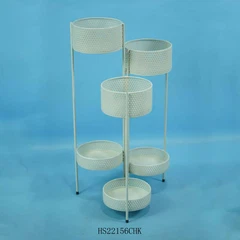
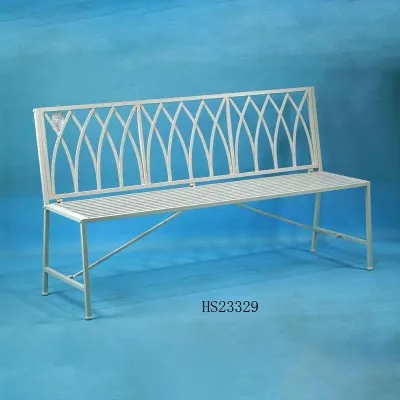

Before ordering metal garden benches in bulk, define where the benches will be used, how many people they should seat, whether they require anchoring, what surface finish is needed and how they will be packed.
Ask the supplier to confirm the material and construction of each main part instead of relying only on a general description such as "metal bench" or "iron garden bench."
1. Start With the Intended Use
The intended use should be the first part of the inquiry. It affects product size, construction, stability, surface treatment and packaging.
| Application | Typical Buying Priority | Questions to Ask |
|---|---|---|
| Residential retail | Appearance, comfort, carton size and assembly | Can the bench be packed efficiently for retail or e-commerce delivery? |
| Hotel or resort | Design consistency, maintenance and project finish | Can the color and design coordinate with other outdoor furniture? |
| Café or restaurant | Frequent use, cleaning and space efficiency | Is the product easy to move, clean and place within the available area? |
| Park or public space | Stability, installation, structural requirements and maintenance | Does the project require anchoring or specific testing? |
| Garden center or retailer | Range planning, seasonal demand and display value | Can several colors, designs or related products form a collection? |
For public or commercial projects, the buyer may need additional stability, load or installation requirements. These should be provided to the manufacturer before sampling because they can affect the entire frame design.
2. Confirm the Bench Dimensions
A product photo cannot show whether a bench fits the intended space. Buyers should provide or approve a dimensioned drawing before placing the order.
Important dimensions include:
- Overall width, depth and height
- Seat width and seat depth
- Seat height from the ground
- Backrest height and angle
- Armrest height and position
- Distance between the legs
- Footprint after assembly
- Carton dimensions after packing
The number of seats should also be confirmed. Terms such as "two-seat bench" can describe a general product type, but the actual seating space may vary between designs.
Request both product dimensions and packed dimensions. Product size affects comfort and placement, while packed size affects storage, freight and container loading.
3. Check the Actual Frame Material
Commercial descriptions such as metal bench, iron bench and steel-frame bench are sometimes used broadly. The buyer should ask what material is used for the legs, seat frame, backrest, decorative panels and connection parts.
A bench may combine metal tube, solid rod, wire, sheet or cast decorative components. Each type contributes differently to the product's appearance, weight and production method.
| Component | Information to Confirm | Why It Matters |
|---|---|---|
| Main frame | Material, tube profile, dimensions and wall thickness | The frame supports the main seating load |
| Legs and feet | Material, shape and ground-contact design | These parts influence stability and floor protection |
| Seat and backrest | Slat, mesh, rod, sheet or decorative-panel construction | Construction affects comfort, drainage and cleaning |
| Decorative elements | How the parts are formed and connected | Small decorative parts can affect finish quality and packaging |
| Hardware | Fastener type, material, quantity and replacement availability | Hardware affects assembly and after-sales support |
For a broader comparison of outdoor furniture materials, buyers can also read Iron vs Steel vs Aluminum Garden Furniture.
4. Inspect the Welding and Connections
Welds connect the structural and decorative parts of many metal garden benches. Their quality can affect frame alignment, appearance and stability.
During sample approval or inspection, check for:
- Consistent connections at the main load-bearing areas
- Missing, incomplete or visibly cracked welds
- Sharp projections or rough welding residue
- Excessive grinding marks
- Frame distortion caused by welding heat
- Uneven gaps between repeated decorative parts
- Coating coverage around welded areas
Not every weld needs to look identical because some areas are structural while others are decorative. However, the acceptance standard should be agreed upon before mass production.
For knock-down benches, inspect the bolted connections as carefully as the welded areas. Holes should align properly, and the supplied hardware should allow the bench to be assembled without forcing the frame into position.
5. Evaluate the Seat and Backrest
The seat and backrest determine how the bench feels in use. They also influence drainage, cleaning, appearance and packaging.
| Construction | Possible Benefit | Buyer's Check |
|---|---|---|
| Metal slats | Simple appearance and open drainage | Check spacing, edges, alignment and support underneath |
| Mesh seat | Open construction and reduced water collection | Check attachment points, sharp ends and surface finish |
| Solid or formed panel | Continuous seating surface | Check drainage, deformation and edge treatment |
| Decorative back panel | Stronger visual identity for retail collections | Check pattern consistency, welds and packaging protection |
Buyers should sit on and inspect the approved sample rather than judging comfort from photographs. The seat angle, backrest angle, armrest position and exposed edges should all be reviewed.
6. Test Stability and Structural Performance
A garden bench should sit evenly on the ground and remain stable during its intended use. Stability cannot be confirmed from the product's weight alone.
The sample review should include:
- Whether all feet contact a level surface
- Whether the frame rocks or twists
- Whether the seat or backrest shows unusual movement
- Whether bolts remain secure after assembly
- Whether the frame stays aligned after loading
- Whether any sharp edges or trapping points are present
Required load, stability and durability tests vary by destination market, customer and application. Buyers should provide the applicable standard or testing protocol rather than asking the factory to assume one.
If the bench will be installed in a park, school, hotel or other public area, confirm whether it must be anchored. The anchoring method, ground type and installation hardware should be reviewed as part of the project-not added after production is complete.
7. Specify the Surface Finish
The finish gives the bench its color and helps protect the metal surface. Powder coating is commonly used on outdoor metal furniture, but the coating name alone is not a complete purchasing specification.
Confirm these details with the manufacturer:
- Surface preparation and pretreatment
- Finish type and color reference
- Gloss, texture or special visual effect
- Coverage around welds, edges and recessed areas
- Drainage and protection of hollow sections
- Required adhesion or corrosion testing
- Touch-up expectations and acceptable appearance limits
The installation environment should be disclosed before the finish is approved. A covered residential patio and an exposed coastal commercial project do not present the same conditions.
For more information about coating specifications, see Powder Coating for Outdoor Metal Furniture: What Buyers Need to Specify.
8. Compare Fully Assembled and Knock-Down Benches
Some benches can be shipped fully assembled, while others use a knock-down structure. Knock-down means the product is shipped in separate parts and assembled after delivery.
| Point | Fully Assembled | Knock-Down |
|---|---|---|
| Installation | Little or no customer assembly | Requires hardware and instructions |
| Packing volume | May require more carton space | May improve carton and container efficiency |
| Connection check | Focus on welded frame alignment | Focus on hole alignment, hardware and final stability |
| Retail experience | Convenient but larger to transport | More compact but instructions must be clear |
The most suitable structure depends on freight costs, retailer requirements, warehouse capacity and customer assembly expectations.
9. Review Packaging Before Mass Production
Packaging should protect the finish, frame and decorative parts throughout handling and shipping. It should also match the buyer's sales channel.
A bench packaging review should cover:
- Protection between metal surfaces
- Corner and edge protection
- Support for armrests and decorative back panels
- Protection against movement inside the carton
- Hardware bags and spare-part identification
- Assembly instructions for knock-down products
- Carton markings, labels and barcodes
- Gross weight and safe manual handling
- Suitability for retail, warehouse or e-commerce delivery
Decorative benches need careful attention because scrollwork, floral panels and projecting details may rub against the carton or other components. Packing should be checked using the actual production sample.
Container shipping is also affected by carton volume. Ask for the carton dimensions, units per carton and estimated loading quantity before comparing landed costs.
10. Approve a Sample and Inspection Standard
A sample helps the buyer check dimensions, comfort, appearance and assembly. However, sample approval should be supported by written specifications and drawings.
Before mass production, confirm which details are fixed and which may have an acceptable tolerance. This reduces arguments caused by subjective descriptions such as "good welding," "strong frame" or "smooth coating."
A pre-shipment inspection can include:
- Product model, color and order quantity
- Critical dimensions and product weight
- Frame alignment and stability
- Welds and connection points
- Surface finish, scratches and coating coverage
- Sharp edges and exposed projections
- Hardware quantity and assembly test
- Labels, instructions and carton markings
- Packaging condition and carton dimensions
- Required functional or project-specific tests
Metal Garden Bench RFQ Checklist
- Reference photo, product drawing or required design style
- Residential, retail, hospitality or public-space application
- Destination country and outdoor environment
- Required overall and seating dimensions
- Material and construction requirements
- Target finish, color and surface texture
- Fully assembled or knock-down structure
- Required testing and inspection criteria
- Individual carton, master carton or pallet requirements
- Expected order quantity and delivery schedule
- Logo, label, barcode and instruction requirements
Common Bulk-Buying Mistakes
| Mistake | Possible Problem | Better Approach |
|---|---|---|
| Ordering from photos only | Dimensions and construction remain unclear | Approve drawings and a physical sample |
| Using "iron bench" as the full material specification | Quotations may use different component materials | Specify each main component |
| Ignoring the final installation site | Finish or stability may not meet project needs | Share the application and environment before sampling |
| Checking appearance but not assembly | Customers may face misaligned holes or missing hardware | Complete an assembly test during inspection |
| Comparing only the factory price | Packaging and freight increase the landed cost | Compare equivalent specifications and total logistics |
Final Purchasing Advice
A reliable bulk order begins with a clear application and a complete product specification. Confirm the actual materials, frame dimensions, joints, finish, packaging and required tests before comparing prices.
When sourcing wholesale metal garden benches, use the approved sample and drawings as production references. This makes inspection more objective and helps the supplier control the details that matter to your market.
Buyers can explore Bee Wing's metal garden bench collection or review the full metal garden furniture range.
For landscaping collections that combine seating with a decorative overhead structure, see the metal garden arch bench category.
Send your target design, dimensions, finish, order quantity and destination market to Bee Wing. The information will help the team review available products and discuss suitable customization options.
Contact Bee Wing
Frequently Asked Questions
Provide the design, dimensions, component materials, finish, order quantity, packaging requirements and destination market. Also state whether the bench is for residential, retail or commercial use.
Fully assembled benches reduce installation work but may use more shipping space. Knock-down benches can improve packing efficiency but require reliable hardware, aligned holes and clear instructions.
Place the assembled sample on a level surface, check that all feet make contact and inspect the frame for rocking or twisting. Use the applicable stability and load tests required by the destination market.
Powder coating is only one part of the protection system. Surface preparation, pretreatment, coating coverage, drainage, packaging and maintenance also affect outdoor performance.
Customization depends on the selected product, production method, order quantity and factory capabilities. Buyers should send a color reference and design requirements for evaluation.
Check dimensions, frame alignment, welds, stability, surface finish, hardware, assembly, labels and packaging. Include any required functional tests in the approved inspection standard.